News
Italy: concern over the availability of packaging materials
The Italian canning industry is concerned about a possible shortage of tinplate for manufacturing cans used by the tomato sector
The production slowdown in the steelworks sector risks penalizing the Italian canning industry which requires 800,000 tonnes of tinplate, in particular to cope with the imminent tomato processing season, with the consequential risk of a noticeable price increase for consumers…
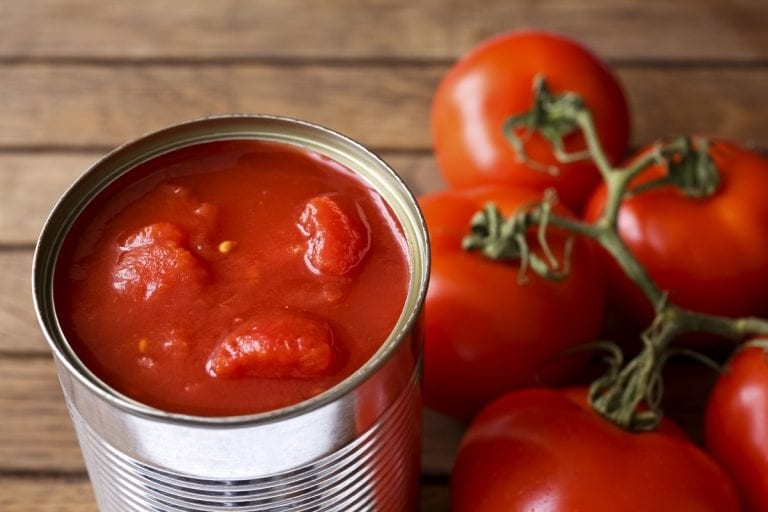 Once again, the Covid19 pandemic is at the root of the problem. As explained in detail by several of the speakers at the Tomato News Conference on 8 June, the quantities of steel from Asian production regions fell significantly last year, without European producers being able to compensate for the shortfall from their reserves. Simultaneously, however, the demand for canned tinplate has increased noticeably, to the point that disruption has become inevitable: tinplate supplies are insufficient and prices of available quantities have increased, with peaks sometimes reaching 60%.
In Genoa, in the old steel plant at Ilva (Riva group), which supplies a large part of the Italian sector, 100,000 tonnes of tinplate are currently being produced, while the country's canning industry requires quantities around 800,000 tonnes. Like for other major processing countries such as China and the United States, these are the needs of a world-leading player in the production of canned tomatoes.
But concerns are apparent throughout the whole sector of canned tomato products: “We have a significant consumption of cans in the canning sector, because steel has always been the main packaging used for legumes and tomatoes,” explained Giovanni De Angelis, director of the ANICAV, the national association of industrial fruit and vegetable canners. “More than two thirds of our production is packaged in tin cans.”
Is a price raise unavoidable?
In the specific case of tomatoes, a race against time is now on, the terms of which are dictated by the perishability of the crop harvested in the fields, as it must be processed quickly so as not to compromise the quality of the canned products. Giovanni De Angelis insisted on the difficulties of this particular period and expressed the usual way in which the sector functions with the following words: “The organization of the production of cans is planned upstream, until the processing campaign starts, which for tomatoes, unlike legumes or pulses, is subject to the harvest's maturation process, knowing that the [fresh] crop cannot wait more than 12 to 24 hours after the harvest. So there is a whole parallel field of activity, especially between August and September, that needs to be coordinated and planned.” Therefore, stakeholders must deal with the question of knowing how to compensate for the shortage of cans.
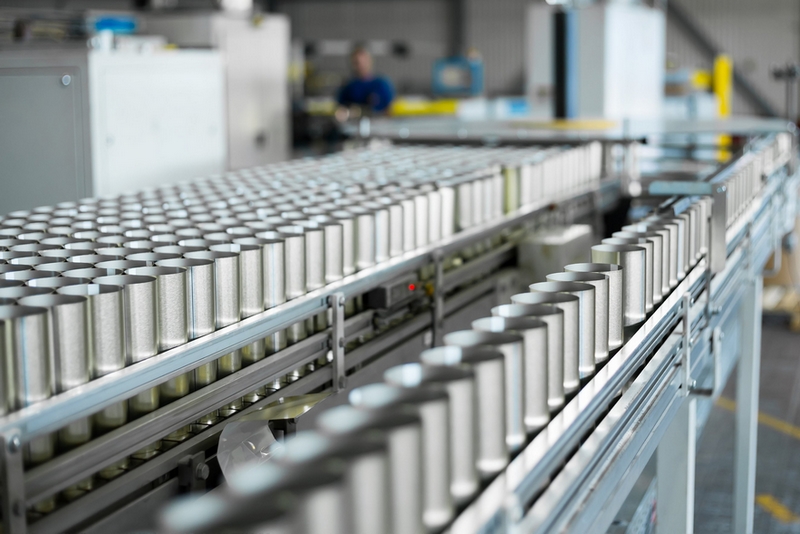 At present, an increase in the cost of canned products is inevitable, a direct consequence of the increase in the cost of steel. With regard to the finished product, if the situation does not change, this pressure could result in an increase in selling prices of up to 10% for the end consumer, also driven by the growth in demand for products with a long shelf-life, a fact that reflects the concern of Italian families (and consumers in many other countries) in the face of the pandemic.
With the gradual return to normalcy, some analysts believe that demand could slow down, and the activity of steelworks is expected to pick up at a satisfactory pace. The director of the ANICAV has explained that the association “is interacting with suppliers, who have raised critical issues but are working to resolve them.”
The stakes are high, and the uncertainty of the general context is just as great. For now, industry players are only hoping that it is not already too late.
Source: gamberorosso.it