News
France: ANSES warns about the Tomato Fruit Blotch Virus
The French Food Safety Agency (ANSES) has identified a new viral disease affecting tomato crops and is urging growers and the agricultural industry to stay alert.
According to the ANSES report, ToFBV, a virus of the Blunervirus solani family, not to be confused with the Tomato Brown Rugose Fruit Virus (ToBRFV), was first observed in Italy in 2018 and in Australia in 2019. Its presence was subsequently confirmed in several countries (Brazil, Portugal, Spain, Greece, Slovenia and Switzerland), and it was detected retrospectively in samples collected in 2012 in Italy and in 2015 in Spain. In France, the virus was detected in six departments in 2023 and 2024. ToFBV has been on the EPPO (European and Mediterranean Plant Protection Organisation) alert list since 2024 (see here), but it is not currently covered by any specific regulations.
The agency aim was to assess the phytosanitary risk associated with ToFBV, in particular its probability of introduction, establishment and spread, and its impact in France. The assessment also sought to identify possible management measures for this virus,
Fruits affected by ToBVF (source: ANSES report)
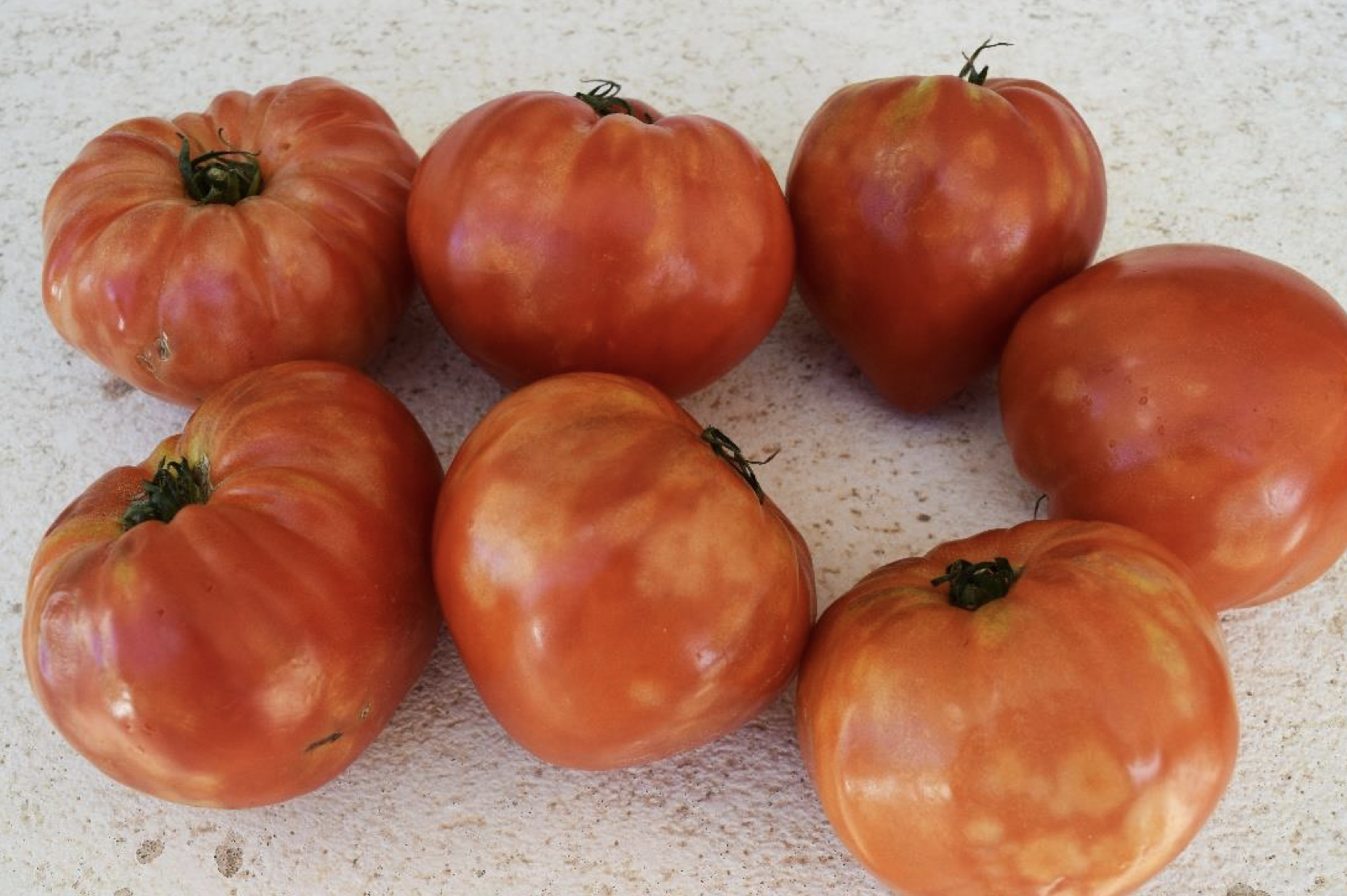 ANSES explained that the virus mainly infects tomatoes (Solanum lycopersicum), and other plants in the Solanum genus, such as nightshade and potatoes, are also considered likely hosts. The mite Aculops lycopersici is suspected of playing a vector role, although mechanical or seed transmission has not been demonstrated. Symptoms on fruit generally affect between 2% and 10% of plants, and can reach up to 20% depending on growing conditions. It causes severe discoloration and deformation, rendering it unmarketable. Since symptoms do not appear on leaves and only manifest on fruit late in production, it is difficult to implement timely management measures such as removing infected plants or controlling the suspected vector spider mite. The economic consequences can be significant, as seen in countries like Italy and Spain. Given the recent identification of this virus, no resistant tomato varieties have been documented, and varietal susceptibility remains unstudied.
Given the significance of greenhouse tomato production in France and neighbouring countries, ANSES emphasized the need for further research to clarify uncertainties and determine effective strategies to combat or limit the virus’s spread. Investigations already highlight the challenges of early detection, the absence of climatic barriers to the virus’s establishment, and the suspected role of the mite Aculops lycopersici as a transmission vector and of nightshade as a reservoir in the fields. There are currently few effective control measures, and the virus could pose additional risks to tomato crops.
So far, the ToBFV has not been an issue in open field cultivation, but as the virus is transmitted by the spider mite (or tomato russet mite), which is seen more often in tomato fields with the increasing summer temperatures, it is being monitored by the French interprofessional organization SONITO.
The ANSES report can be accessed here (in French)