News
European Union: A new market for agricultural carbon credits
The EU is counting on agriculture to reduce the effects of climate change
The European Commission has published a report aiming to develop the sector of controlled carbon farming in Europe. This is the first step towards the institution of a market for “carbon credits” that could increase revenue for farmers.
The European Union is committed to drastically reducing greenhouse gas emissions, to the point of reaching climate neutral levels by 2050. In order to attain this target, different strategies have been developed, aiming at guiding all production sectors towards a “zero emissions” future.
However, in the meantime, the old continent must reduce its emissions of carbon dioxide (as well as other greenhouse gases). In other words, whereas processors, the transport sector, and the energy sector, etc. have been progressing along the road to reduced emissions, the carbon dioxide that is emitted must be eliminated from the atmosphere, and this task is being entrusted to agriculture.
The “carbon farming” initiative
On 27 April, the Eur opean Commission published a report "Setting up and implementing result-based carbon farming mechanisms in the EU" (available HERE), which is the result of two years of studies in which Brussels experts carried out an analysis of ways to promote carbon farming in Europe – a scheme to provide a framework and to encourage farmers to adopt practices that are likely to increase the quantities of CO2 sequestered in the soil.
This preliminary study will then lead to a “carbon farming” approach aimed at translating into concrete terms the conclusions contained in the report, once it is approved.
In particular, the study has identified five promising areas where action can be taken:
- restoring and re-wetting peatlands
- developing the agroforestry sector
- maintaining and increasing carbon of organic origin held in the soil
- managing the carbon in grasslands
- managing farm animals
The carbon farming initiative is expected to go public by the end of the year, and should then lead to a series of pilot projects aimed at testing agronomic approaches that endeavor to increase the atmospheric carbon sequestered in the soil and reduce emissions, creating models in order to measure the CO2 that is fixed in this way and raise awareness among the different stakeholders.
Towards a carbon credits market
One key aspect of the scheme involves measuring and certifying the quantities of carbon sequestered in the soil. If the Commission approves the models developed to measure carbon dioxide in agricultural farmland (or which is not emitted by activities of the primary sector), it will then be possible for farmers to obtain “carbon credits” (a kind of carbon emissions permit), which they can then sell on the market.
“Carbon farming opens new opportunities of revenue for farmers. This is an example of the way that the ecosystems being considered for the CAP and private financial support programs can reward agricultural practices that help us fight against climate crises and the loss of biodiversity,” stated European Commissioner Frans Timmermans.
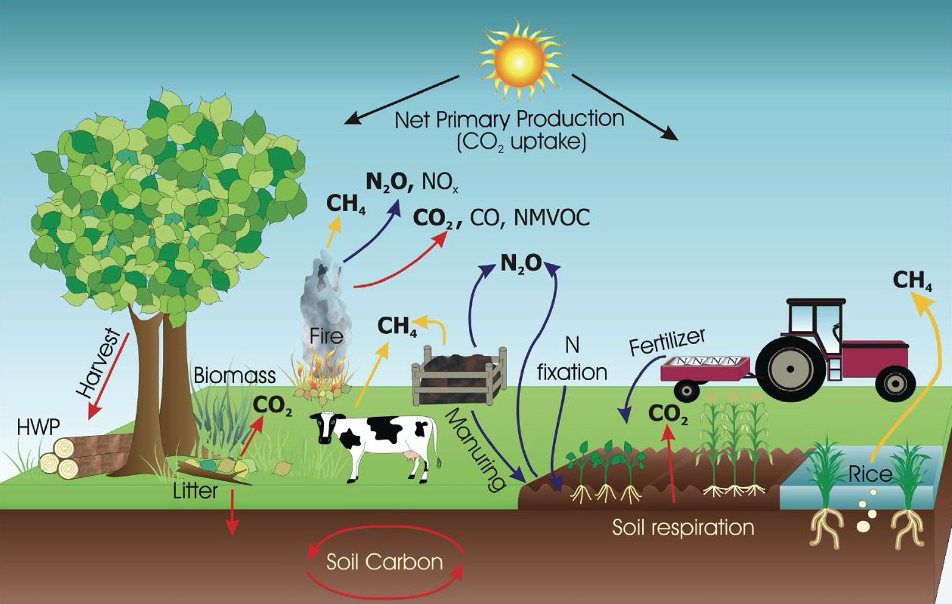
In short, in the future, farmers who adopt practices that can help sequester carbon dioxide in the soil (like limiting mechanical work carried out on the soil) or reduce emissions that affect the climate (for example by improving animal waste management) will receive “carbon credits”. These credits can then be sold by farmers to companies that want to reduce their carbon footprint (voluntary market) or to companies that must comply with the emissions quota exchange program (mandatory market). In any case, this new business opportunity will be particularly interesting to farmers, and it has already taken off successfully in the United States.
Sources: op.europa.eu, agronotizie.imagelinenetwork.com