News
The 2023 tomato processing season is underway, and this year has once again been marked by a number of difficulties, according to the ANICAV
The 2023 tomato processing season has begun, encountering a number of difficulties again this year. There are still many unknown factors, and the social and economic context is likely to have a significant impact on the sector's economic sustainability. On the one hand, operators are facing a constant increase in production costs, especially for raw materials and packaging, and on the other, they must deal with a contraction of consumption caused by inflationary patterns, leading without doubt to a negative impact on company margins. This combination of factors is causing great concern for one of the most representative and important sectors of the Italian food industry.
 "Shelf price increases in recent months have not, in most cases, translated into higher profits, and will only partially cover ever-increasing costs. I'm thinking in particular of the price paid to the agricultural sector for raw material, which has seen increases of up to 40% compared to last year, bringing the average reference price for round tomatoes to EUR 150 /tonne in both the north and south of the country. This is not an easy situation for our companies," says ANICAV President Marco Serafini. For this processing season, around 68,600 hectares have been planted in Italy, representing a 5% increase against 2022. On the basis of this information, and taking into account historical yields, it is possible to forecast a production of around 5.6 million tonnes.
The industrial sector remains vigilant, in order to guarantee a finished product that continues to meet the high standards that are expected. There remains a degree of uncertainty linked to possible bad weather, with the risk of a continuous succession of extreme events (hail storms, heatwaves, etc.), which have already had, and could continue to have, a major impact on crops and hence on industrial production.
"It will be difficult, if not impossible, to offset soaring production costs. So we are expecting a particularly complicated marketing year ahead, but we have every confidence in the resilience of our operators who, once again, will do their utmost to prevent these issues from having undue repercussions on end consumers. Despite the increases, the prices of tomato products remain affordable, thanks in particular to the efforts of the industry."
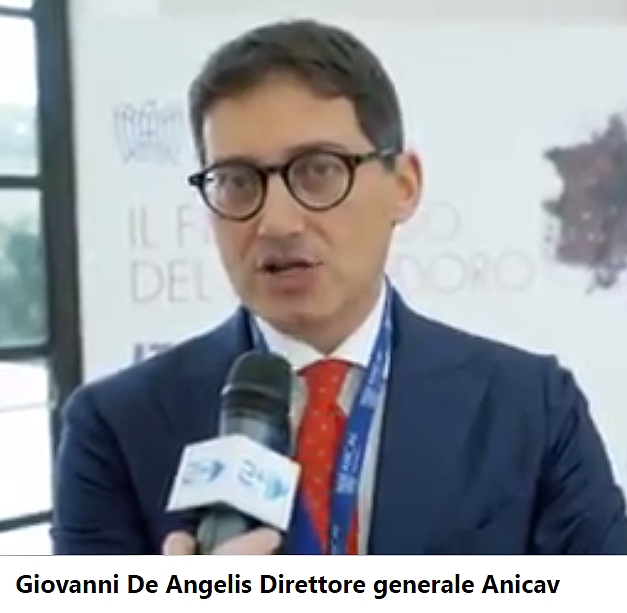 "It's not hard to see how much it costs to prepare a plate of pasta with tomato sauce compared to a simple breakfast at the bar, with obvious differences in terms of nutritional value," concludes Giovanni De Angelis, ANICAV General Director. "As for us, we guarantee, as always, our utmost commitment to protecting and improving our sector, which is a flagship industry."
Some complementary data
The tomato industry is Italy's largest processed fruit and vegetable sector, with total sales (2022) of EUR 4.4 billion (of which 3.3 billion are generated by companies associated with the ANICAV). The sector plays a strategic driving role in the national economy, with around 10,000 permanent jobs and over 25,000 seasonal jobs, in addition to the workforce involved in related businesses.
Italy, the world's third-largest tomato processor after the United States and closely following China, remains the leading processor of products intended directly for final consumption, accounting for 14.8% of worldwide production (37.3 million tonnes) and 56.5% of European processing activities.
Source: corrierenazionale.it