News
AI-Powered Yield Forecasting: A New Era for California Tomato Growers
California’s agricultural sector, a global powerhouse in food production, continually seeks innovations to navigate complex environmental and market challenges. A groundbreaking new artificial intelligence (AI) tool, recently launched by the University of California, promises to deliver unprecedented precision in crop yield forecasting across the state. This advancement holds particular significance for the tomato industry, offering vital insights that can directly empower growers to enhance operational efficiency and strategic planning.
Developed by researchers from UC Davis and Texas A&M University, this multi-modal deep learning model is designed for county-level, crop-specific yield prediction. It integrates a rich tapestry of data sources crucial for California’s diverse agricultural landscape: Landsat satellite imagery provides monthly insights, daily climate records from the Daymet Climate Database capture weather dynamics, and OpenET, a NASA-supported platform, supplies critical evapotranspiration data for understanding crop water use. High-resolution soil properties are also incorporated, offering static long-term variability. The model was trained using extensive historical yield data from the USDA National Agricultural Statistics Service (NASS) spanning 2008 to 2022.
The result is a highly effective forecasting system, demonstrating an impressive overall R² score of 0.76 across an unseen test dataset of over 70 crops. This strong predictive performance means the model can accurately correlate predicted yields with actual outcomes, providing a reliable outlook well before harvest season.
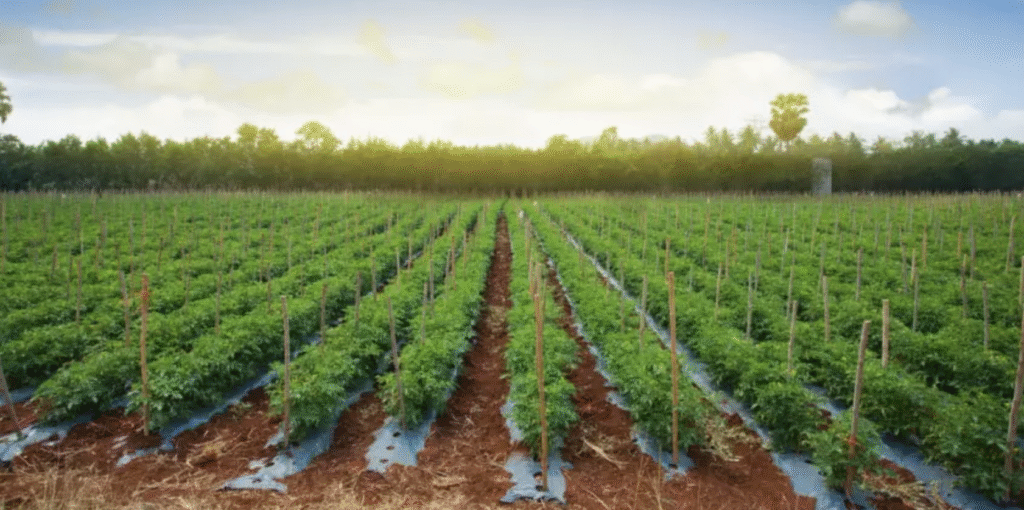
Direct Benefits for Tomato Growers
For California’s tomato growers, this AI-powered forecasting tool offers a transformative advantage. The ability to access reliable, localized yield predictions months in advance provides a strategic edge for critical decision-making. Specifically, these forecasts can optimize:
- Irrigation and Water Management: With detailed evapotranspiration data, growers can fine-tune irrigation schedules, conserve water in California’s often water-stressed regions, and effectively manage drought risks. This precision is invaluable for a water-intensive crop like processing tomatoes.
- Labor Planning: Accurate yield predictions enable growers to anticipate labor demands more precisely, leading to optimized staffing for planting, cultivation, and particularly harvest, minimizing shortages or excesses.
- Fertilizer Application: By forecasting crop needs based on predicted yields and environmental conditions, growers can optimize nutrient inputs, reducing waste and enhancing crop health for better tomato quality and yield.
- Harvest Logistics and Supply Chain: Early and accurate yield data allows for better coordination with processors, optimizing transportation, storage, and processing schedules. This can reduce post-harvest losses and improve overall supply chain efficiency for the tomato industry.
Furthermore, this AI system can seamlessly integrate with existing agricultural management tools, such as the UC Agriculture and Natural Resources (UC ANR) CropManage program. By layering predictive insights from the new model onto current practices, tomato growers can fine-tune their strategies, combining historical performance with forward-looking intelligence. As Mason Earles, assistant professor at UC Davis and a lead researcher, emphasized regarding the broader implications of accurate yield prediction: “Predicting what yields you’re going to have at the end of the season… it’s really important because it determines how much labor contract you’re going to need and the supplies you’ll need…” This directly translates to more efficient operational planning for California’s tomato farms.
Looking ahead, the UC research team plans further enhancements, including the incorporation of pest and disease surveillance data and real-time ground observations directly from growers. Future upgrades envision direct integration with precision agriculture technologies like GPS-based yield monitors and variable rate application systems.
As California’s agricultural sector continues to grapple with challenges such as water scarcity, labor availability, and climate volatility, this AI forecasting tool represents a significant stride. For tomato growers, it offers an essential data-driven resource to plan, adapt, and maintain competitiveness in a dynamic global market.
Sources: The Ag Center News, Cornell University