News
Glyphosate: the debate is far from over
EU votes to extend glyphosate licence for five years
The European Union voted on Monday 27 November to extend its authorization for the world's best-selling herbicide for an abbreviated period of five years, with France and Germany splitting over the move.
President Emmanuel Macron of France said after the decision was announced that he had asked government officials to draw up a plan for banning the herbicide in his country within three years.
The vote on Monday capped an unusually lengthy and combative European review process that unfolded amid claims and counterclaims about the cancer-causing risks of glyphosate.
The deliberations frustrated parties on all sides. Agrochemical companies criticized the review process as driven more by politics than science after it became clear that the weed killer's use would not be reauthorized for the 15 years typical for such chemicals, or even for 10 years. Environmental advocates said that the agrochemical industry had tainted scientific reviews in Europe by meddling in them.
On Monday, with the herbicide's registration set to expire on 15 December, 18 of the union's member states voted in favor of extending its use for five years, nine voted against the proposal and one abstained. The vote was weighted by population size.
 The Glyphosate Task Force, an industry group that includes Monsanto and Syngenta, said in a statement that it was "profoundly disappointed at the outcome of today's meeting whereby member states categorically ignored scientific advice." The group added that it believed the decision was "not related to any scientific assessment and mainly influenced by public perception and driven by politics.”
The use of glyphosate has soared in the United States and in other developed countries over the past couple decades as it was paired with crops that were genetically modified to be resistant to it, allowing farmers to use it to kill weeds after crops emerge from the ground. Although Europe has largely eschewed genetically modified crops, glyphosate has also been the best-selling weed killer there as well.
The herbicide became engulfed in controversy after the International Agency for Research on Cancer, part of the World Health Organization, declared it a probable carcinogen in 2015. That spurred a federal case in the United States over claims that it caused cancer, and prompted California to declare it a carcinogen.
The international agency's finding has been disputed by many other government bodies, including two in Europe, the European Food Safety Authority and the European Chemicals Agency. The latest major study, published this month by researchers at the National Institutes of Health, "observed no associations between glyphosate use and overall cancer risk."
On the other side of the Atlantic
Monsanto recently announced it is joining a broad coalition of agriculture groups from across the United States to challenge the constitutionality of "California’s unjustified listing" of the herbicide glyphosate as a substance “known to the state of California to cause cancer” under Proposition 65 (Prop 65).
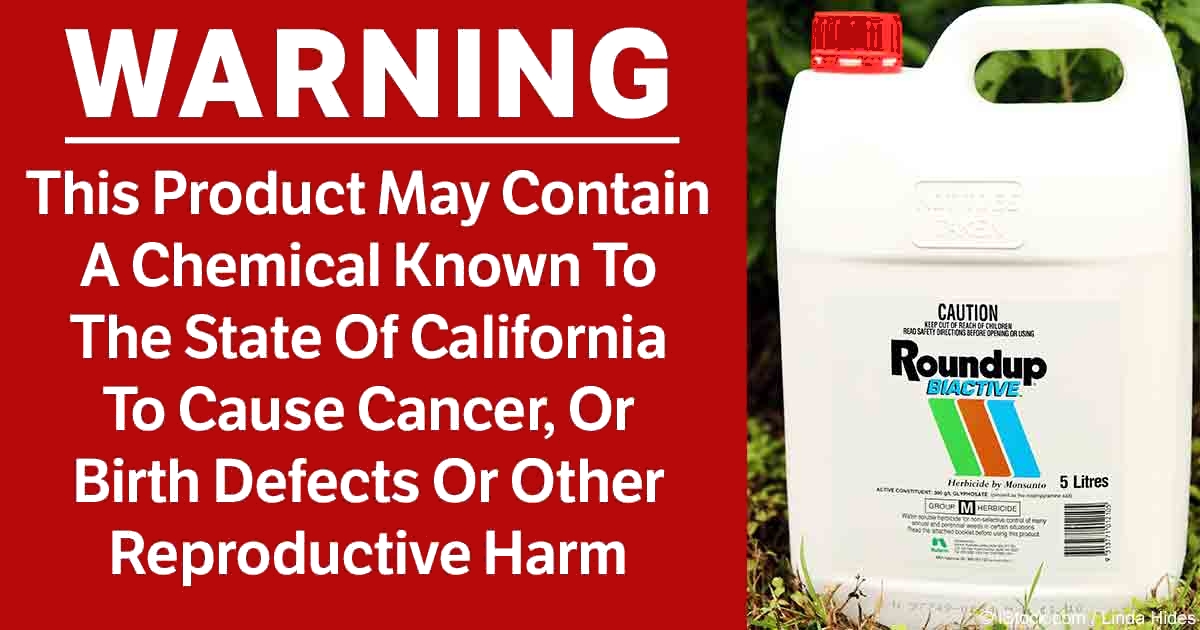 According to Monsanto, because of "California’s unjustified listing of glyphosate" in July 2017, manufacturers of products containing glyphosate, or products with even trace residues of glyphosate, sold in California could be required to affix a “false and misleading warning label to their products” starting in 2018. This labelling requirement would not only impact Monsanto and its Roundup-branded products, but also other glyphosate-based herbicides produced by other companies, the crops grown by U.S. farmers who use the herbicide, and food products derived from those crops. The consequences of this labelling requirement could be significant, including higher production and compliance costs that translate into higher prices for consumers at the grocery store.
In July 2017, California added glyphosate to the Prop 65 list, stating that the substance is “known to the state of California to cause cancer.” In taking this unjustified action, Monsanto feels that "California ignored its own regulatory agency’s scientific conclusions, as well as safety assessments conducted by the U.S. Environmental Protection Agency (EPA), European regulators, and every other regulatory body in the world – all of which have concluded that glyphosate is safe for use and not carcinogenic”. This was reinforced just last week when the largest epidemiological study* ever conducted on glyphosate and farmers published in the Journal of the National Cancer Institute, concluding there is no link between glyphosate and any form of cancer.
Again according to Monsanto's press release, "California’s listing was based solely on a highly controversial and deeply flawed 2015 opinion by the International Agency for Research on Cancer (IARC). Recent investigations have shown that IARC members concealed and manipulated data that would have undermined IARC’s opinion. IARC’s flawed opinion and non-transparent process have come under investigation by the U.S. Congress."
Sources: Reuters, New York Times, Monsanto
Complementary data:
*The study was published in the Journal of the National Cancer Institute under the title:
“Glyphosate Use and Cancer Incidence in the Agricultural Health Study”